
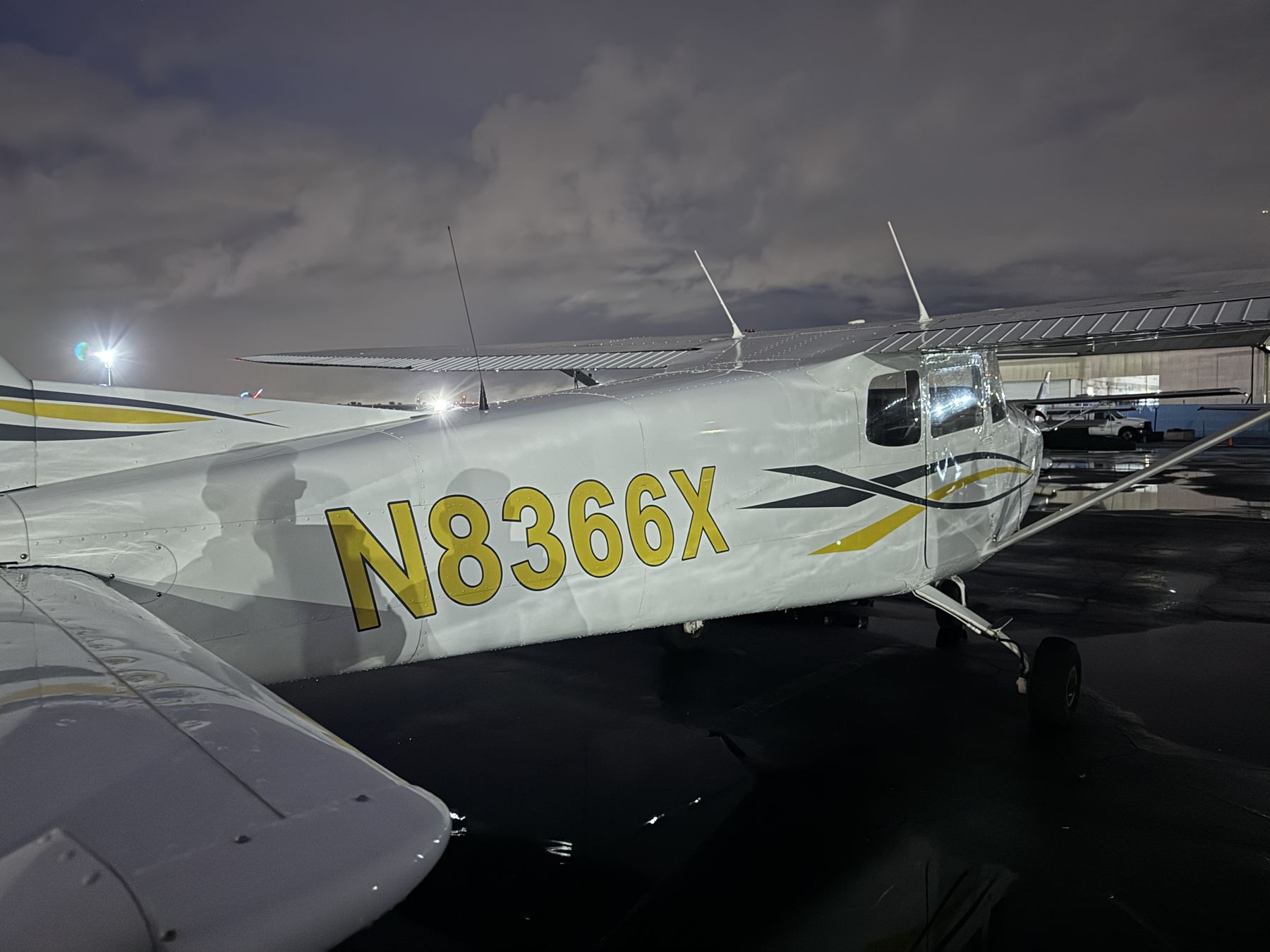
Case study · N8366X · Long Beach, KLGB
One airplane. 48.8 paid hours that did not exist before.
A 1961 Skyhawk that cost the same to insure and tie down whether it moved or not. This is the whole build, in order: the insurance class, the lease terms, the safety gates, the onboarding, and the tax nobody warns you about. Including the three things we had to undo. Lease terms are at the bottom if you want to fly it.
Utilization
The airplane went from parked to booked.
Every hour below was flown by somebody paying to fly it. Our own flying is not in here, because it was never revenue. Straight off the Hobbs meter and through the software, no estimates and no rounding up.
48.8
Hours flown by lessees
Our own flying is not counted
$4,880
Billed to them
Across 13 flights, on our Stripe
Hobbs hours flown per month
N8366X · 1961 Cessna 172C · KLGB
0.0
6.4
15.8
26.6
Jun
0 flights
Jul
2 flights
Aug
6 flights
Sep
through Sep 19
September is hatched because the month is not finished, and it is already the biggest one: 26.6 paid hours and $2,660 billed, all of it flown by the tenth. June is zero because no lessee had flown it yet. Before the lease, this airplane went whole months without moving.
The experiment
Could one airplane pay for itself without becoming somebody's second job?
A 1961 Skyhawk that flew a few dozen hours a year and cost the same to insure and tie down whether it moved or not. We spent the summer of 2026 finding out.
- The airplane
- 1961 Cessna 172C, modern Garmin panel
- Based
- Long Beach · KLGB
- Structure
- Non-exclusive dry lease
- Billing
- Per Hobbs hour, no monthly minimum
- Commitment
- None. Month to month.
- Hours flown by lessees
- 48.8 across 13 flights
Step one
Insurance
The use class has to match what the airplane actually does.
A policy written for flying your own airplane is not the same policy as one written for pilots who do not own it. We worked ours through a broker who does aviation full time, on an Instruction and Rental class, with the hull value and the liability limits set for that use. This is the first conversation, not the last one, and it is a conversation with your broker, not with us.
Step two
Terms
We killed our own minimum.
The first version had a monthly minimum, a multi-month term and a penalty for leaving early. Every prospect hesitated in the same place, on the same sentence. We deleted all of it: pay by the Hobbs hour, no minimum, month to month, no early-termination fee. The lesson was that the terms were costing us more pilots than the rate ever did.
Step three
Safety
Safety rules that do not stop people from flying.
Renter's insurance is required before a pilot's first solo, with a hard backstop, and the checkout can happen while the policy is pending so nobody is stuck waiting. Instruction only with an instructor named on the aircraft policy, engaged and paid by the pilot directly. The rules live in the software, so they get applied the same way every time instead of depending on who is at the desk.
Step four
Onboarding
Onboarded start to finish without a single phone call.
Apply, upload certificate and medical, sign the lease electronically, put a card on file. Then four gates before anybody flies alone: signed agreement, verified insurance, a checkout with a named instructor, and activation by the owner. Every pilot on the airplane came through that flow without anyone at a desk. The paperwork moves on its own; the approval is still a human decision.
Step five
Tax
The bill nobody warns you about.
In California, use tax on an aircraft can be assessed against the county the airplane is hangared in rather than the address on the purchase paperwork. It is the kind of thing an owner learns about in month nine. Rules vary by state and county and we are not your accountant, but you will hear about it from us in week one, with a name to call.
The result
An airplane that used to sit now flies, pays for itself through the software, and takes about five minutes a week of anybody's attention.
Same tail, same tie-down, same insurance line item. What changed was the terms, the paperwork and the system around it. We’ll walk you through the actual operating numbers, including the costs that do not belong in a generic projection, during the fit check.
Zero counter transactions
Every flight is billed off Hobbs the moment it is logged, to a card already on file. Nobody runs a card and nobody sends an invoice.
Nothing to chase
The statement writes itself and the money has already moved. There is no thirty-day wait and no phone call about it.
One owner task
Approving a pilot. Everything before and after that is the system doing its job.
Built to transfer
Nothing in the structure is specific to this tail. The same lease, the same gates and the same portal drop onto another airplane and another owner.
Want this on your airplane?
We will set yours up the same way, the lease, the insurance conversation, the gates, your own portal, and the support while your first pilots come on. Do itwith us, or have us do it. We do not manage it, we do not take a cut, and you run it.
The deal
$100 an hour. That's the whole price list.
This is a dry lease: you lease the airplane itself and operate it as pilot in command. You buy your own fuel, you carry your own renter's insurance, and you pay only for the Hobbs hours you fly. No monthly minimum, no term, one honest rule for overnight trips.
- Rate
- $100 per Hobbs hour
- Monthly minimum
- None
- Term
- Month to month, 30 days' notice either way, no fee
- Away nights
- Two Hobbs hours per night away from KLGB, or hours flown if more
- Fuel
- You buy your own. Return with both tanks full at KLGB
- Where
- Paved public-use airports in the continental U.S.
- Billing
- Card on file with Stripe, charged per flight after you log it
Rate can change on 30 days' written notice, never retroactively. Full terms are in the lease you sign.
The airplane
1961 airframe. 2026 panel.
Continental O-300-D, six cylinders, 145 horsepower, and a panel most Skyhawks on a flight line would trade for. Maintained on a tracked schedule with no shortcuts.
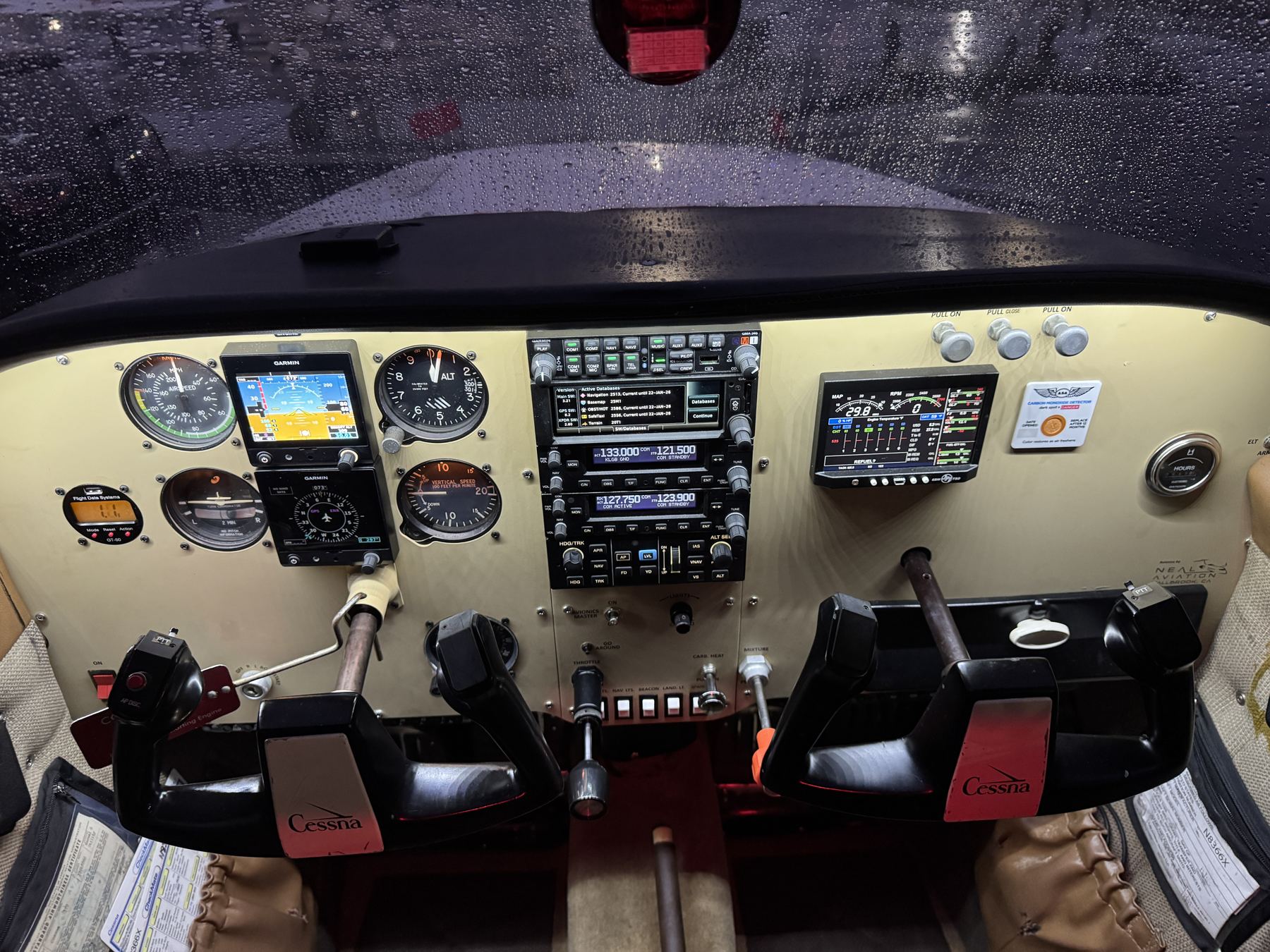
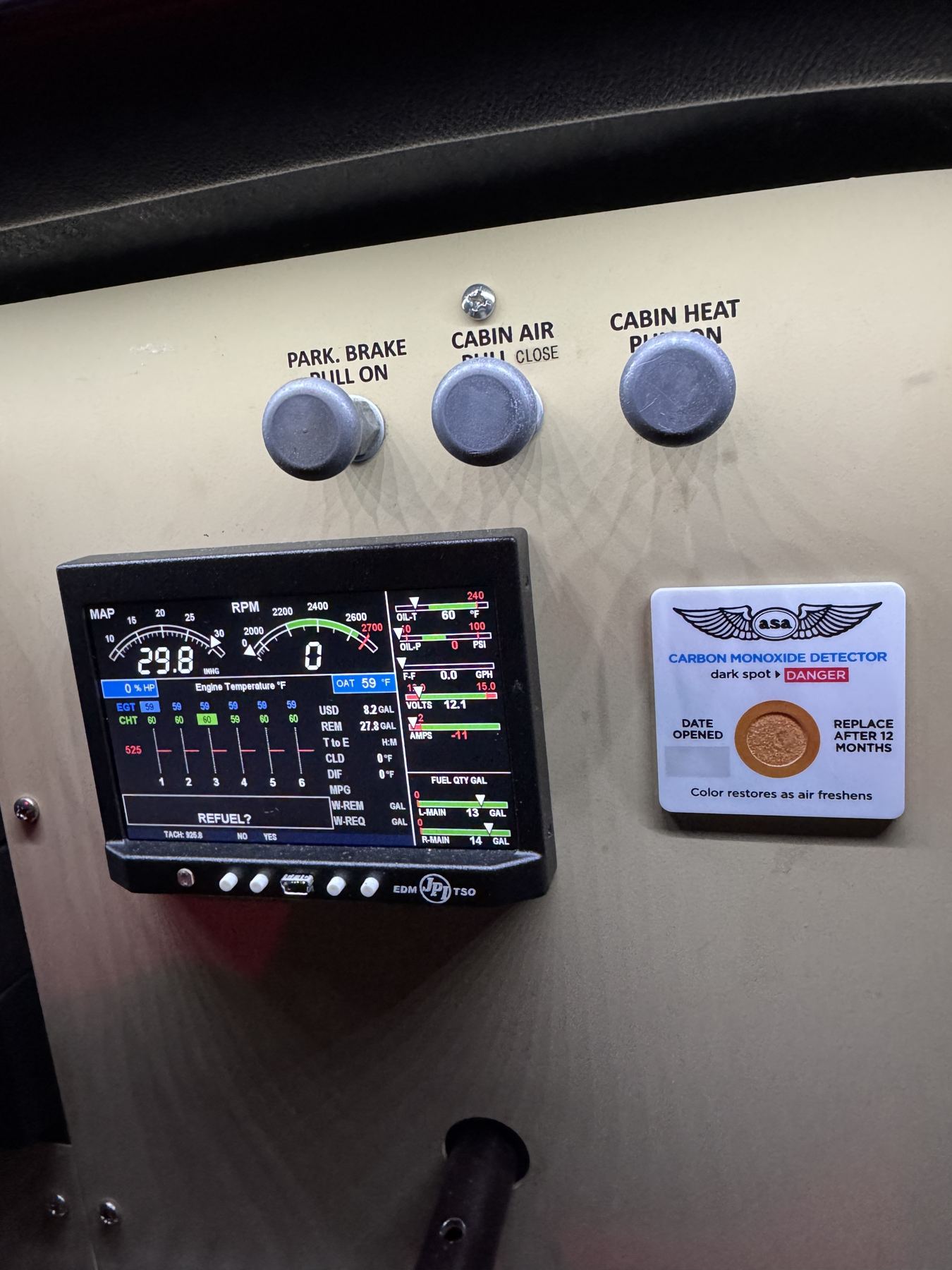
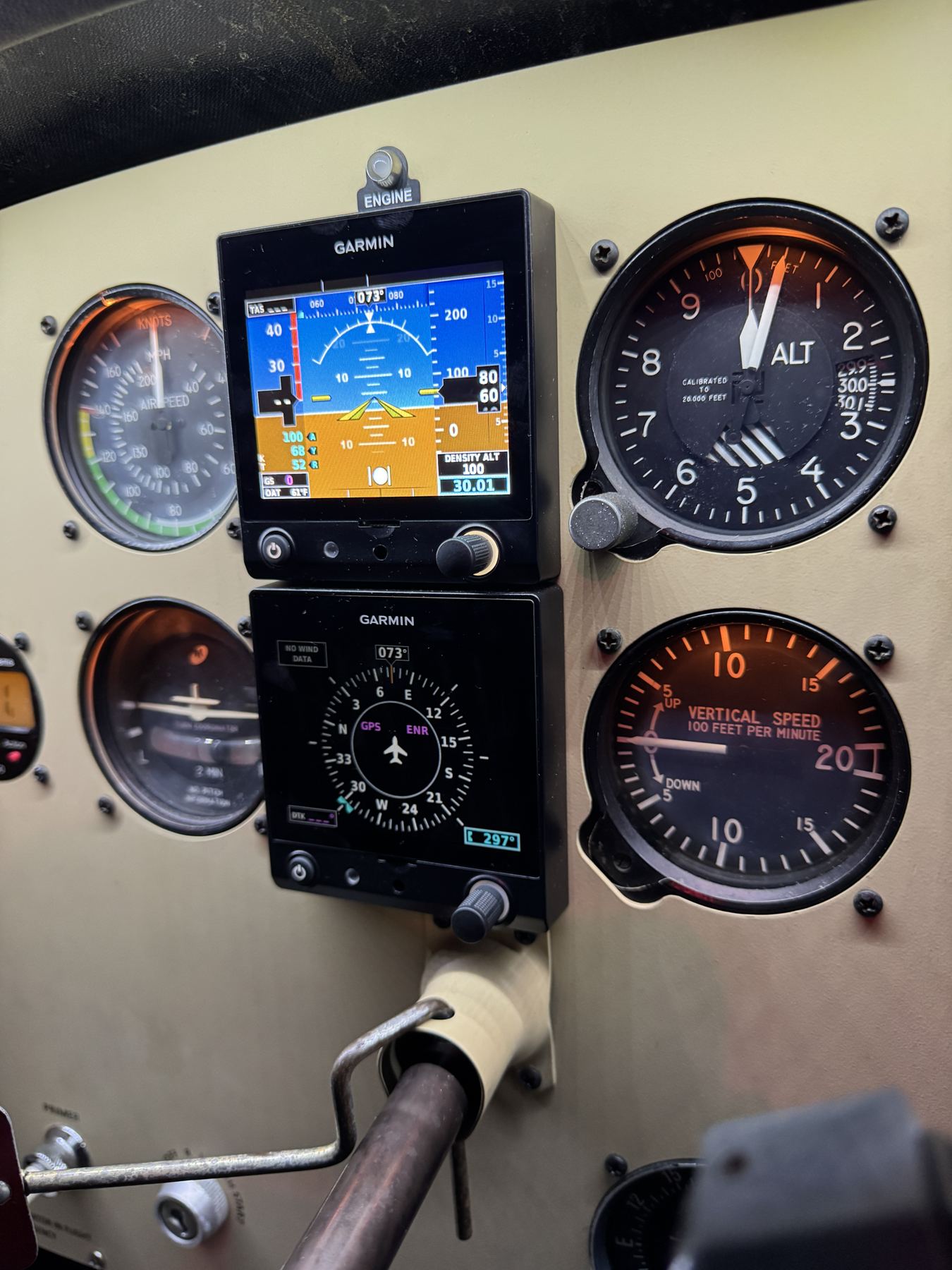
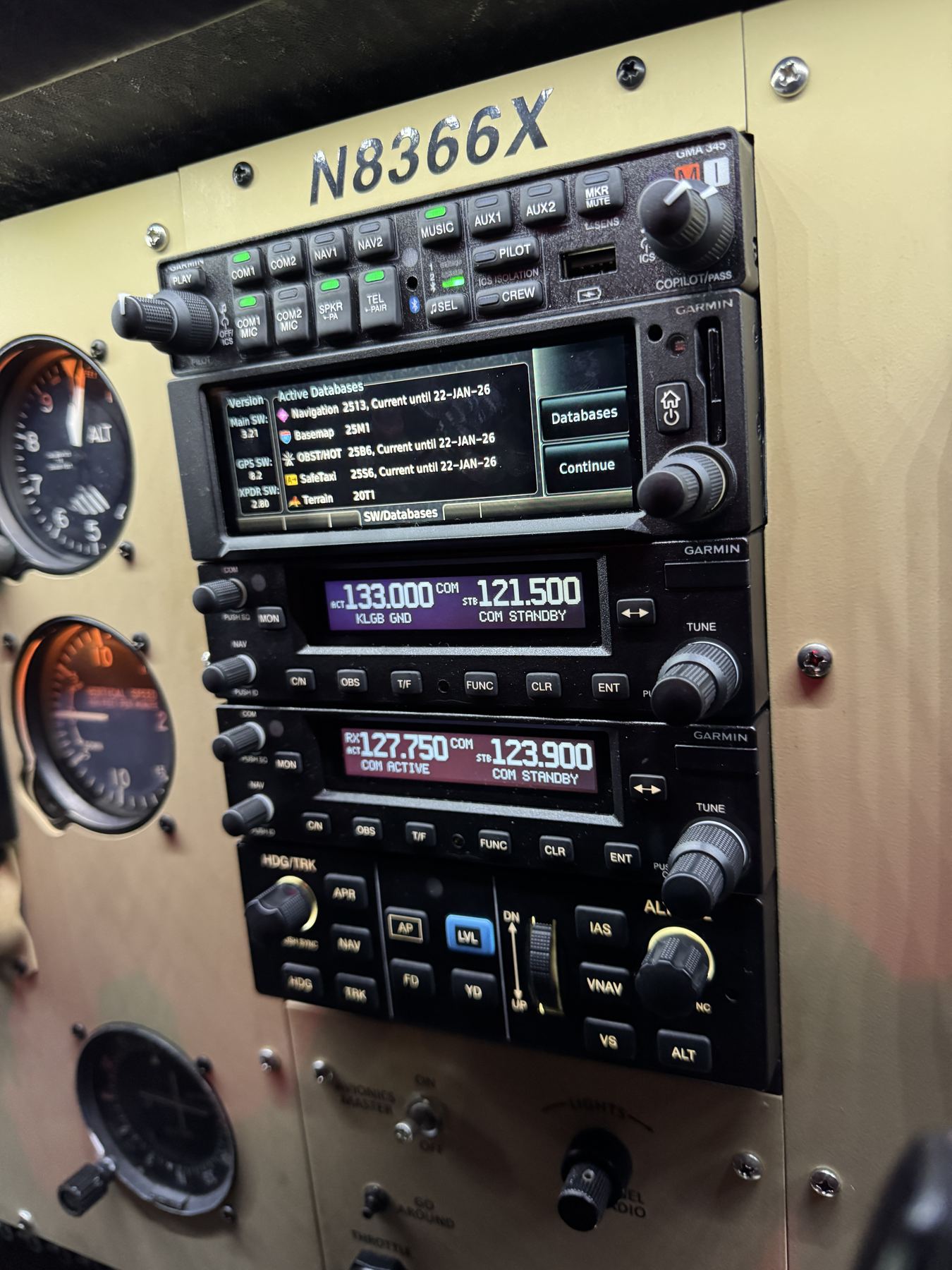
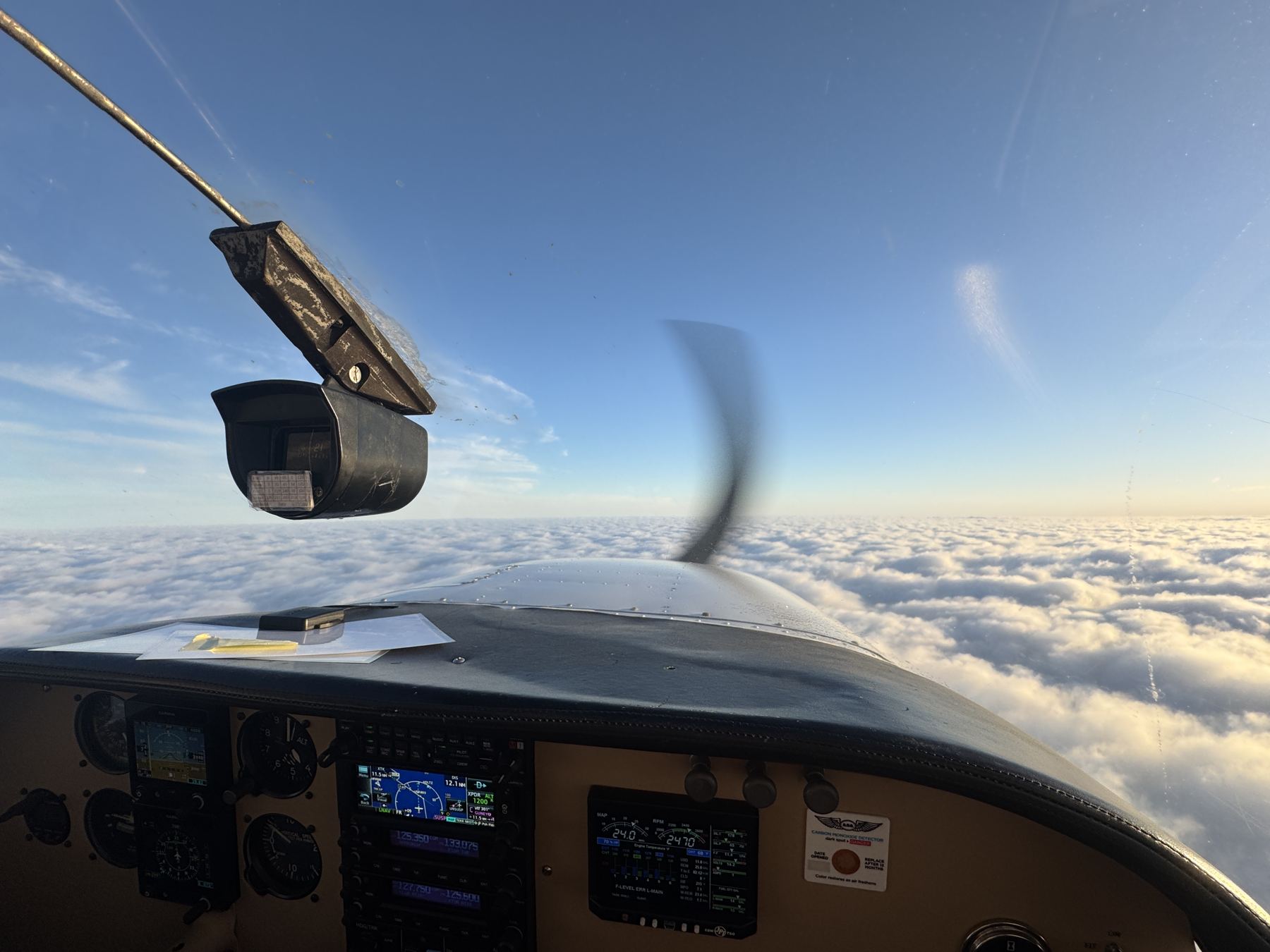
Everything is Garmin except the engine monitor. No vacuum system. LPV approaches, ADS-B traffic and weather on the map, and an autopilot that flies the approach.
- Garmin GNX 375Touchscreen WAAS GPS navigator with LPV approaches. ADS-B In and Out with traffic and weather on the map.
- Garmin GFC 500Two-axis digital autopilot with altitude preselect, VNAV, level mode and electronic stability protection. Approach-coupled.
- Dual Garmin G5Solid-state attitude and HSI. No vacuum system to fail.
- Garmin GMA 345Bluetooth audio panel with phone and music. Dual COM.
- JPI EDM-900TSO’d primary engine monitor: per-cylinder EGT and CHT, fuel flow, fuel remaining.
Requirements
Who can be on the lease.
The list is short because the standard is high. Every item is tracked in the portal so it never becomes a surprise on a ramp.
Student pilot or higher
Students fly with an instructor named on our insurance policy, who approves every flight in the portal before takeoff, dual or solo. Private and up: ASEL, current medical, current flight review. The portal reads your certificate and medical from a photo and tracks the dates.
Renter's insurance, before you fly
Liability of at least $1,000,000 combined single limit and aircraft damage coverage of at least $1,000. Certificate on file before the first flight. AJM does not pick your limits; the lease spells out your exposure.
A checkout in N8366X
With an insurance-approved instructor you engage and pay directly. Instructors are named on the policy before the flight. AJM does not provide instruction.
Underwriter approval
Your pilot history goes straight to the carrier, never to AJM. There is no published hours minimum. Approval is the named insured's call.
A KLGB security badge
Required for unescorted ramp access, at your expense. The airplane is tied down at Million Air.
A signed dry lease and a card on file
Signed electronically after onboarding. You hold operational control every time you fly.
Renter’s insurance is the requirement pilots ask about most, and the one most are given the wrong number for. What a renter is actually on the hook for walks through the three clauses that decide it.
How to get on the airplane
Four steps. Most of it from your phone.
- 01
Tell us about your flying
The form on this page. Certificate, hours, what you want to use the airplane for. You hear back from the owner, not a queue.
- 02
Onboard in the portal
Create your account, snap your certificate, medical, license and insurance. The portal reads them and flags what's missing.
- 03
Clear the four gates
Agreement signed. Insurance certificate on file. Checkout complete. Solo access activated by AJM. All four, in that order, then you're live.
- 04
Book, preflight, fly, log
Reserve from your phone. The preflight screen shows live airworthiness items. Land, enter Hobbs and tach, and the flight bills itself.
Start here
Tell us about your flying.
Certificate, hours, what you'd use the airplane for. Approval depends on pilot history and insurance, and we'll be straight with you either way.